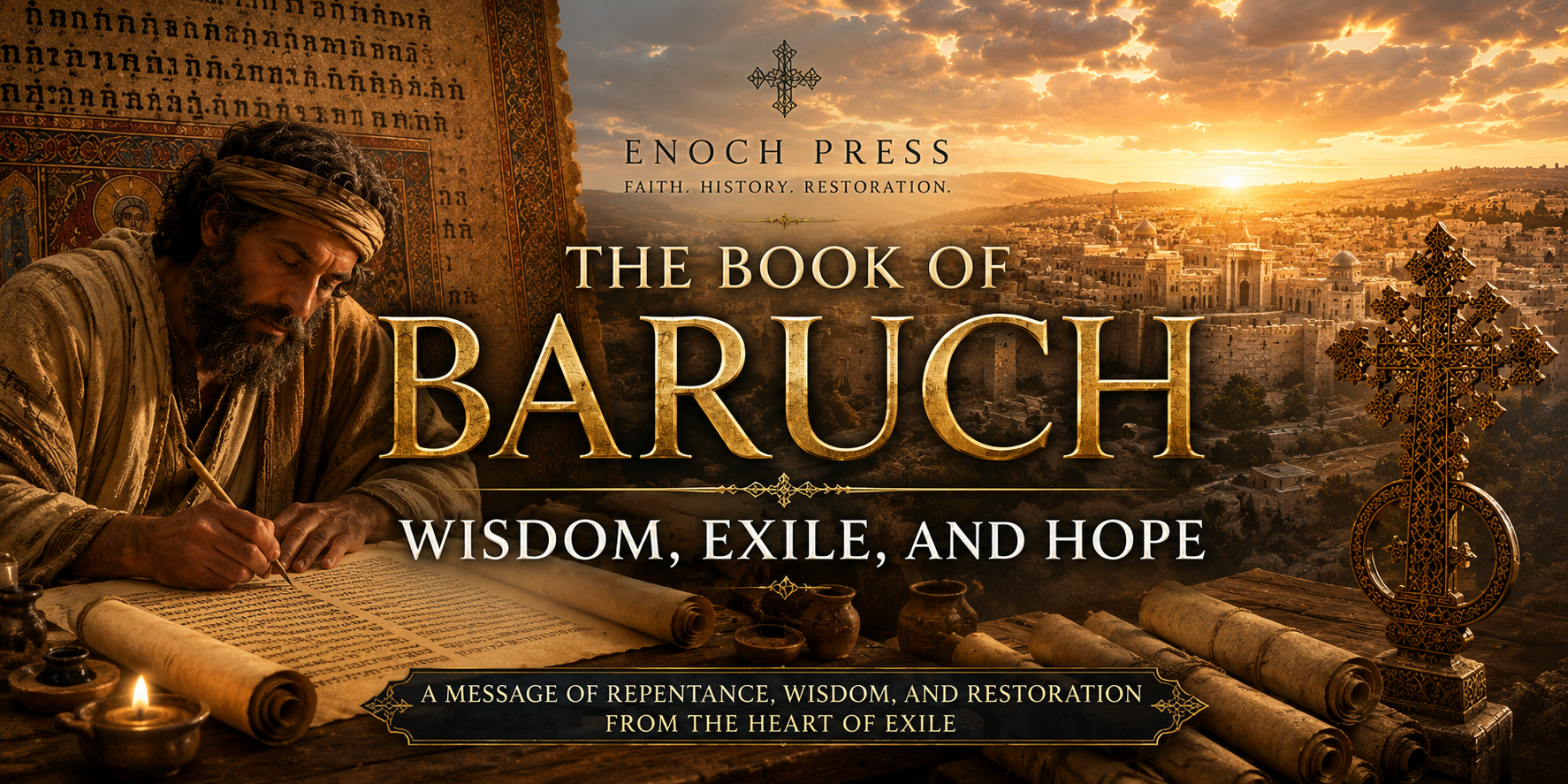
Among the lesser-known books preserved within the broader biblical tradition, the Book of Baruch stands out as a powerful message of repentance, wisdom, and hope. According to biblical tradition, Baruch was the son of Neriah and served as the scribe and companion of the prophet Jeremiah.
The historical setting centers on the Babylonian exile. Babylon had conquered Jerusalem, destroyed the temple, and carried much of the population away from their homeland. It is within this context of loss and displacement that the Book of Baruch takes shape. The Ethiopian Bible preserves
The Ethiopian Bible: 81 Books Most Christians Have Never Read, including Baruch — a book that has remained part of the scriptural tradition in Ethiopia for centuries.
One of the most memorable portions of the book is its prayer of repentance. The people acknowledge their failures and appeal to God's mercy. Through poetic language, Baruch captures the weight of exile and the longing for restoration. Another major theme is wisdom. The book teaches that true wisdom belongs to God and cannot be obtained merely through power, wealth, or achievement. This is a body of literature that grappled with questions of divine knowledge and human responsibility, much like
The Book of Enoch: A Beginner's Guide to the Lost Scripture and
The Book of Jubilees: Why It Matters for Understanding Genesis.
Although Baruch begins in the shadow of exile, judgment is not the final word. The book repeatedly points toward hope, restoration, and God's faithfulness to his promises. The relationship between Baruch and Jeremiah helps illuminate the book's message. Together they emphasize both accountability and mercy — a pairing that reflects the prophetic tradition as a whole.
The Watchers in the Book of Enoch: Who Were They? shows another angle of this tradition, exploring how ancient writers understood the boundaries between the human and the divine.
Baruch remains valued because of its themes of repentance, wisdom, prayer, restoration, and hope. The book invites readers to consider their own failures honestly and to trust that restoration is possible. For modern readers, the book continues to speak to questions of failure, hardship, wisdom, and renewal. Texts like
The Books of Meqabyan: Ethiopia's Forgotten Heroes of Faith show how the Ethiopian biblical tradition has long preserved writings that address exactly these human experiences — exile, sorrow, faithfulness, and hope.
**Reflection**
The Book of Baruch reminds readers that failure does not have to define the future. Through repentance, wisdom, and trust in God's faithfulness, restoration remains possible.
Free Printables & Study Resources
Get Free Printables & Study Resources
Join thousands of readers who get Ethiopian Bible printables, word search puzzles, and devotional guides delivered straight to their inbox.
No spam, ever. Unsubscribe anytime.

 ← Back to Blog